Halfway through Boston Marathon training + a note on the comparison game

The 2019 Boston Marathon is 39 days away, and I am officially more than halfway done with Hal Higdon’s 12-week Boston Bound training plan!

Last weekend was a big training weekend for me — 8 mile tempo on Saturday and 18 miles on Sunday. I feel really good about how both runs went. I averaged a pace in the 7:50s for my tempo, and felt awesome throughout. I think the weather definitely helped– Saturday it was in the low 40s and dry, totally ideal running weather!

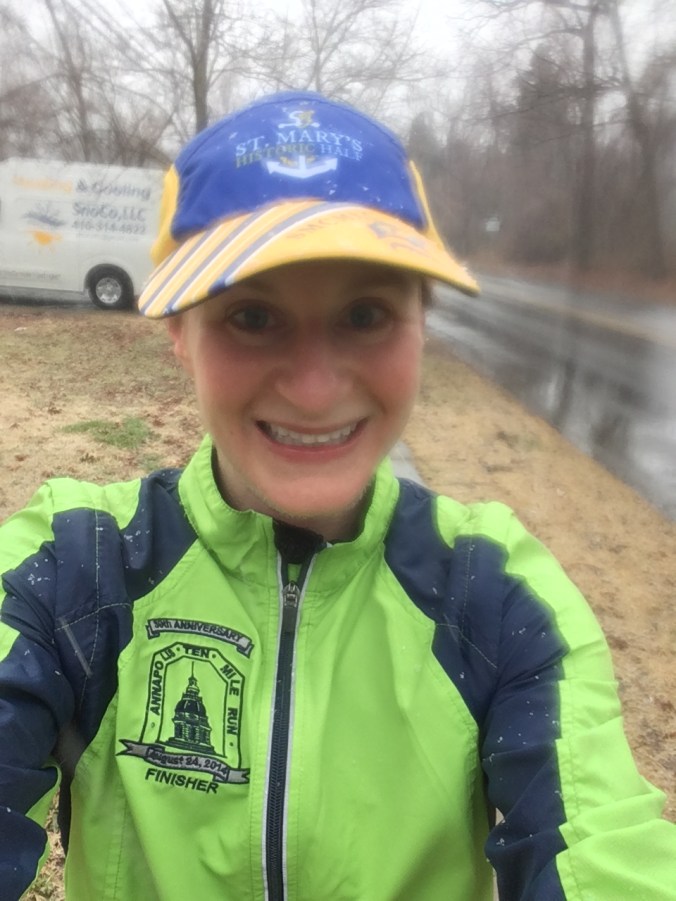
Sunday, well, it was less than ideal for my long run. About six miles in, it started to sleet, and it only got worse from there. I actually felt OK when I was running– I had on running tights, my long-sleeved Boston Qualifier Adidas shirt, my tried-and-true windbreaker from the 2014 Annapolis Ten Mile Run, and a hat from the 2017 St. Mary’s Half Marathon to keep water off my face. My goal was to run an easy pace and finish within 2 hours and 45 minutes, which I did, almost on the nose. But as soon as I stopped running, I was FREEZING (it was only about 35 degrees outside.) I was also starving (18 miles will do that to you!) I drove home, took a hot shower and made a huge bowl of pasta with meatless meatballs, spinach and pesto, and lounged around the rest of the day!

image1

18 miles later….

That was probably the crappiest weather I’ve had to endure during this training cycle, although tonight wasn’t fun. I had six hill repeats to run, so I headed to the Naval Academy Bridge after work. It was about 30 degrees and windy, and I did not feel like grinding out that workout. But I did it and feel good about it. Fitness coaches like to say, “How bad do you want it?” Well, tonight I had to want it really f*cking bad.

Overall, though, I feel I’ve really lucked out. This winter has been fairly mild, really, and it’s already March 6! I know sometimes we get Nor’easters in March here, but hopefully that won’t happen this year. I have two 20-milers on the schedule this month, so let’s not have like a foot of snow falling on a Saturday or Sunday, thanks!

The comparison trap

I wanted to spend some time talking about an unhealthy habit I’ve struggled with for years — comparing myself to others.

We all do it, and I think this behavior can be helpful as a form of self-motivation — but it can also be destructive, too.

I’m trying to find a balance between those two things.

I’m in several Boston-related groups on Facebook, and I’ve learned a lot about the race and gotten some great pointers on everything from training to running the race itself to sightseeing in Boston.

But I’ve also gotten a glimpse into others’ training plans and it makes me second-guess my own training and wonder if I’m doing enough. For instance, I noted earlier that I’m following Hal Higdon’s 12-week Boston plan, which means I started officially training in January for the April race. I know I had a good base going into the training — I ran a 1:42 half in December and maintained long runs of 10-12 miles on the weekends, so it wasn’t like I was starting from nothing — but I also know a lot of my fellow Boston runners started training back in November or December. Should I have started training earlier? Too late now, I guess.

And while I’ve always known my weekly mileage as a marathon runner is lower than average, it’s become REALLY obvious that it’s WAY lower than your average Boston Marathoner. During marathon training, I typically run somewhere in the 30s for my weekly mileage. I will probably top out in the low 40s for this training cycle. I run four days a week and go to kickboxing class the other two days. (And I take a rest day.) I suppose I’d run more if I didn’t do kickboxing — but I love kickboxing and the friends that I’ve made through my class, and I’m not willing to give it up even if running more would theoretically make me faster.

I generally don’t even keep track of my monthly mileage, unless I’m doing a monthly challenge as I did in January. But boy, every runner on Instagram sure does! I see post after post of runners posting their monthly tallies of 200+ miles, and I can assure you I am nowhere close to those numbers. It’s hard not to feel like a bit of a slacker!

I also don’t watch my diet as closely as a lot of other more serious runners seem to. I don’t eat horribly, but I like to treat myself, too. I drink good beer on the regular. I’m obsessed with edible cookie dough lately. I eat a lot of cheese (except on days before long runs, ’cause that’s a gastrointestinal disaster waiting to happen.) I’m a smaller, thinner person anyway, but when I see others talking about dropping five pounds to get to their “racing weight,” I think, should I try to get leaner, too?

I try to tell myself that I earned my spot in Boston just like everyone else who qualified, and if my training works for me, then that’s enough.

It’s going to have to be!

A 10K, a 5K and an update on Boston Marathon training!

The first time I trained for a full marathon (the 2015 Pittsburgh Marathon), I swore I would never train for a spring marathon again. That winter was awful, with numerous snow storms and ice storms and brutally cold temperatures. My now-husband and I were forced to run three long runs on the treadmill — a 10-miler, a 14-miler and a 16-miler (my God, it was brutal.) Nope, nope, nope, I said to myself. If I ever do a marathon again, it will be a fall marathon. Screw this.

Then I ran the marathon that May and loved it. And the next month, I signed up for the 2016 Rock ‘N Roll D.C. Marathon, held the following March. And now I’m spending my fifth consecutive winter training for a marathon and I truly can’t imagine a winter without having a marathon to look forward to! Honestly, I wouldn’t say I’ve become a fan of winter, but having a goal to train and work toward during the darkest, coldest months of the year helps me get through a time of year that I’d always dreaded. Plus, I warm up a lot when I run (and I maintain that I’d rather train in 25 or 30 degree weather than 80 or 85 degree weather, especially with how humid and gross Maryland summers can be!)

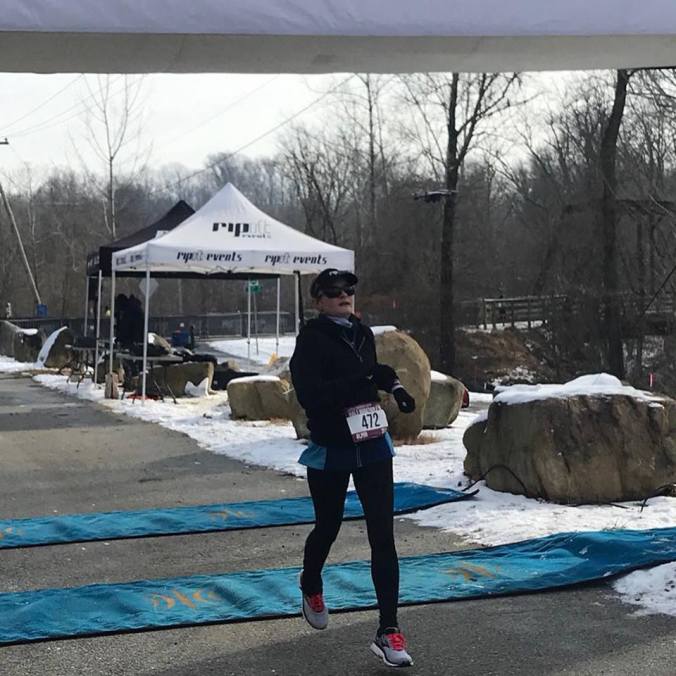
And last weekend, I got a true taste of winter running when I ran in Rip It Events’ 3rd annual Little Patuxent River Run Half Marathon and 10K. This race, held every year on Super Bowl Sunday, takes place on the Patuxent Branch Trail in Howard County. I had run the half marathon the past two years, but opted for the 10K this year. Why? Honestly, I was paranoid about falling and injuring myself with less than three months to go until Boston. I’ve fallen off the treadmill and also while running in downtown Annapolis on the cobblestone streets, so yeah, it’s safe to say that I am not always the most graceful. Wasn’t worth the risk this year. (You can read my recaps of the 2017 and 2018 Little Patuxent halfs here and here!)

That turned out to be the right decision, because this is what the trail looked like at the start of the race:

51526253_10161363206195176_6067089876279361536_n

Pretty, but slick!

Yikes. Because it was only in the 20s that morning, there was no chance any of that was melting any time soon. My only goal was not to fall and hurt myself — I knew I wouldn’t be setting any PRs (which would have been extremely unlikely at a trail race in the very best of conditions anyway!)

Because I had run this race twice in the past, I was familiar with the trail, and I remembered how beautiful the surrounding woods and river were — especially with the snow. So I tried to enjoy the scenery while also paying close attention to my footing. For the first mile or so, there were a lot of icy patches that we had to dodge around, and because the race is an out-and-back, I knew I’d have to watch out for the ice at mile 5, too!

The course is a challenge even when there isn’t snow and ice on the ground. There are two rather steep climbs, at miles 2.5ish and mile 4, that force even the speediest runners to slow wayyyyy down or even walk. There are some long declines, too, which can be equally scary if you trip over a rock or a root or something. And when packed snow covers the trail and you can’t even see any tripping hazards, well, it’s really tough!

But I never once fell, so mission accomplished! My finish time was 56:32, by far my slowest ever 10K time. Somehow, that was fast enough to get me 3rd in my age group, which surprised me!

LPRR

As a Rip It Events ambassador, I ran this race for free. Opinions are entirely my own! A full list of 2019 Rip It events can be found here. If you’re interested in running any of them, let me know and I’ll share my 15 percent discount code with you! 

Annapolis Striders’ Valentine’s 5K

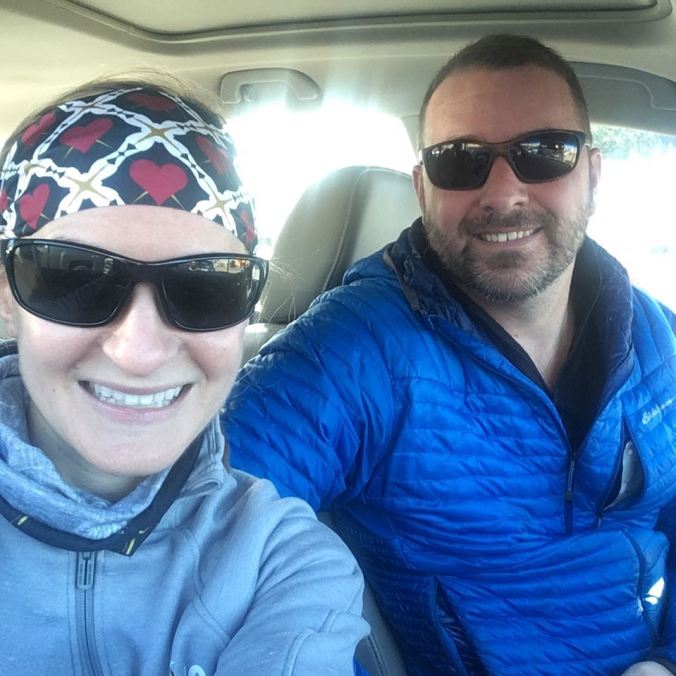
Wow, that was a cold one. My husband and I ran the Valentine’s 5K at Kinder Farm Park in Millersville yesterday with a bunch of friends, but it was so frigid I couldn’t bear to take my gloves off to take out my phone and get some pictures at the race start/finish. 16 degree windchill, ughhhhh! This is the two of us thawing off in the car afterwards:

51828325_10161385886195176_7646739961114263552_n


I had hoped for an age group award, and even looked at last year’s winners to see how fast I needed to run to be a contender. It appeared that I needed to run sub-23, which I thought was doable. And I did, finishing in 22:43, but it wasn’t fast enough. There were some SPEEDY runners out there, and I finished 6th in the 30-39 age group. (Although, Tammi, who finished a few seconds ahead of me, pointed out that if there had been a 35-39 age group, she would have finished first and I would have been second. And then her husband said, “Well, if my aunt had nuts she’d be my uncle.” So. Yeah.)

The run was OK. As I’ve said before, 5Ks are my nemesis and I often execute them poorly. This race reminded me of the Turkey Trot 5K that I ran on Thanksgiving Day. You know, that time I ran the first mile in a blazing 6:34 and then blew up during the rest of the race?? That basically happened again, except this time I ran the first mile in 6:46 (such restraint), then the second mile in 7:32 and the third in 7:35. At least those miles were consistent? But just think if I hadn’t busted out a sub-7 mile right out of the gate! Stupid! At least this 5K was faster than the Turkey Trot.

I would like to get better at 5Ks, but it’ll take some specific 5K training (i.e., not running them as part of marathon training.) I think I’m going to run another 5K on March 16, just about a month before Boston, so we’ll see what I can do then and if the speed work I am doing as part of my plan might actually help me run a good 5K.

Boston 2019 training

Nine weeks until Boston 2019! Having BQ’d in December 2017, I’ve been waiting SO long to run this race and I can’t even believe it’s almost here! I’m following Hal Higdon’s Boston Bound 12-week plan, and so far, it’s going well. He has me alternating hill repeats with speed work (Yasso 800s) every week, similar to what I did when I followed his Advanced plan to get my qualifying time. The long runs also alternate by mileage and time. For example, last weekend I had to run an easy 14 miles. This weekend, my long run was an hour and a half, with the first three-quarters run at an easy pace and the last quarter run at marathon pace. I’ve never done a long run by time before now, and I have to say I am liking it a lot. The time passes quickly, and it’s fun to finish a long run strong!

So what marathon pace am I shooting for in Boston? Good question. In a perfect world, I’d BQ again, but with the tighter standards for 2020, I’ll have to run 3:35 or better. And Boston is known to be a tough course, and my last two marathons were 3:53 (Baltimore) and 3:47 (B&A). I think continuing to work on my speed will get me back closer to where I was when I ran Rehoboth and qualified with a 3:35:00, but I’ve got a long way to go. That said, I believe a finishing time somewhere in the 3:40s is feasible.

And if I don’t meet that goal — it’s Boston! It’ll be awesome no matter what.

Have you run Boston? What advice do you have for me?


My running goals for 2019

Happy New Year! This year is already off to a good start, running-wise. Today I ran Charm City Run’s Resolution Run 5K in Baltimore and finished second in my age group with a time of 23:54. To be honest, that was my slowest 5K in years! There are a few reasons why I believe that was the case:

  1. It was at 2 pm, which makes fueling a challenge! Usually I like to eat my bagel, peanut butter and half a banana in the morning for breakfast before a race– today, we slept in (duh, last night was New Year’s Eve), then got up and made omelettes before heading out about two hours later. By the time my husband and I got to Baltimore and lined up at the start, I was hungry again! I might not have made it had it been a longer race.
  2. There was a loooonngg hill at mile 2 that really took the gas out of me.
  3. It was so windy. It actually felt like an early spring day — I believe it was about 60 degrees — but running into the wind is never any fun.
  4. I didn’t feel 100 percent. No, not because I was hungover (seriously!) We went to Florida for Christmas and both brought home coughs. I feel mostly OK, but I’m sure it had an impact — once I crossed the finish line, I started coughing hard immediately.

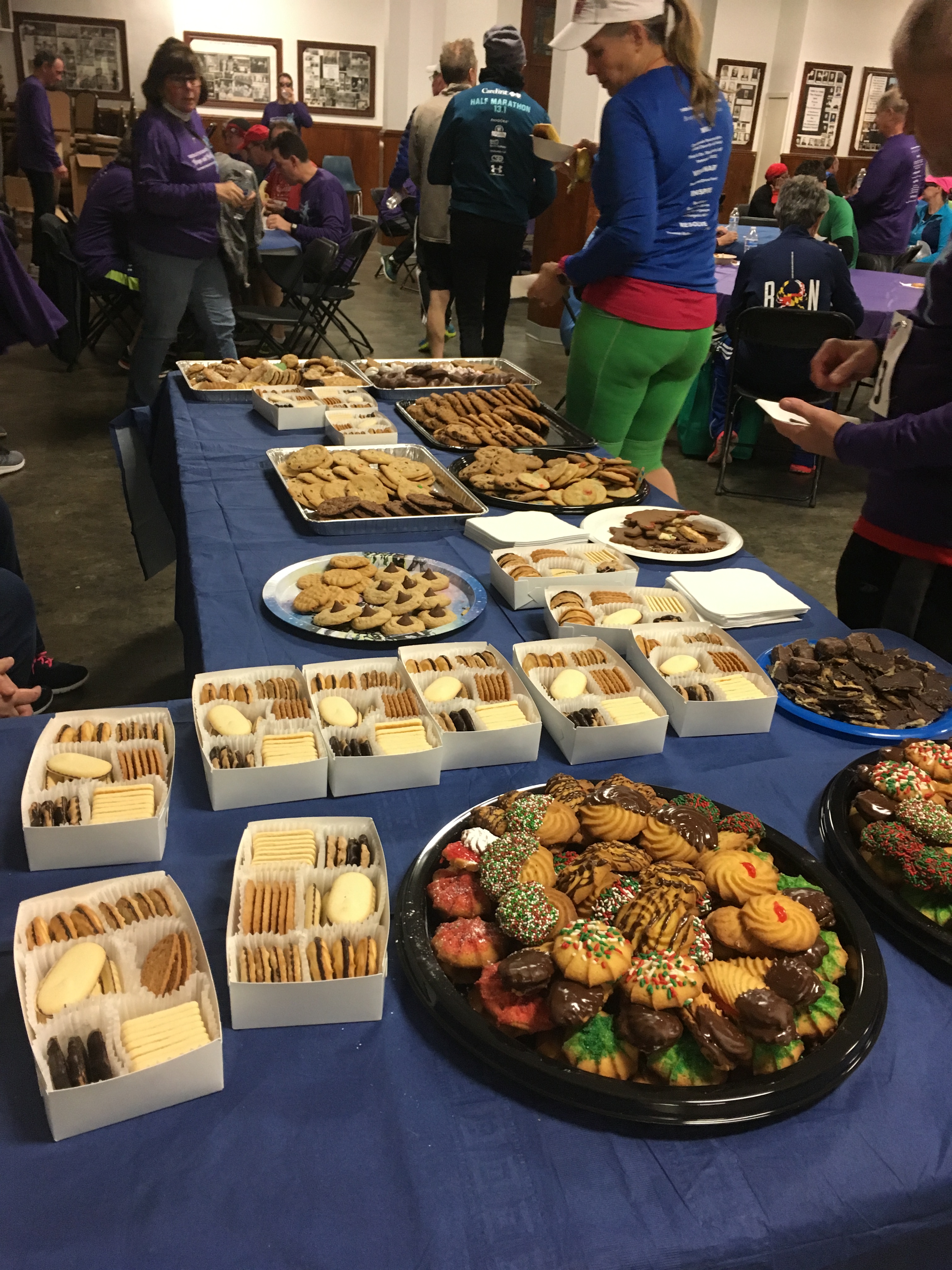
I really enjoyed this race, though. It was held in Patterson Park in Baltimore, which is a lovely park, and proceeds benefited Earl’s Place, which helps men in the city who are homeless. Afterward, runners got chili (and there was a vegetarian option!) and cornbread, plus there was an epic cookie spread. Yum!

image1.jpeg

I’ve been thinking a lot about my goals for 2019, which is a big year for me because I get to run the Boston Marathon on April 15! That is obviously going to be my main focus for the next few months, but I have a lot of other plans, too.

  1. I am going to race a triathlon. I can’t believe I am going to do this. I can barely swim! So it looks like I’ll need to take some refresher lessons. Rip It Events’ Columbia Association Triathlon in June has two options: A sprint and a super sprint. The super sprint, which is what I am going to do, is a 200 yard swim, a 5 mile bike ride and a 1.75 mile run, and fortunately, the swim is in a pool (open water freaks me the hell out.) This is so far out of my comfort zone — in addition to not being a good swimmer, I do not excel at sprinting anything — but hey, why not? As a Rip It ambassador, I am racing this tri for free. I do have a 15 percent discount code to share with anyone who is interested, so if you would like to sign up, let me know! 
  2. I would like to run a sub-1:40 half marathon. I have run 17 half marathons, with a two-year-old PR of 1:41:01. I have yet to actually follow a training plan for a half — I just kinda wing it. Maybe if I followed an actual half marathon plan, I could see some real improvements in my time. We’ll see. I’m already signed up for two halfs late in 2019 — the half at the Baltimore Running Festival in October and the Rehoboth Seashore Half in December — so I guess my training for those will depend a lot upon my training for a bigger race in the fall. Which brings me to my next goal….
  3. I need to settle on a fall marathon — or maybe something more? I have long said that I have no interest in going beyond 26.2 miles, but one of my friends was raving about an ultramarathon he did in the Lancaster, Pennsylvania area a few years ago and encouraged me to consider it. It’s a 50K, so not THAT much more than a marathon … right? I’m torn. I really love the 26.2 distance and am already thinking about trying to shoot for a 2021 BQ, since I will be in a new age group. (Yet my standard will still be 3:40, thanks to the recent changes the Boston Athletic Association made to the qualifying times.) If I do run a fall marathon in 2019, it will either be Steamtown in Scranton, Pa., Marine Corps, Philly or Richmond. Gah! So many marathons I would love to run. If you have any suggestions, let me know!

What are your goals for 2019?

When every second counts: I got into the Boston Marathon with 8 seconds to spare

Did you ever think about what you could do in eight seconds?

Read a sentence in a book? Give someone you love a hug? Walk up a flight of stairs?

I never did, either. Until the Boston Athletic Association announced that the qualifying cutoff for the 2019 race was four minutes, 52 seconds.

I qualified for Boston 2019 at the 2017 Rehoboth Seashore Marathon with a perfect five-minute cushion — meaning I squeaked into the race with eight seconds to spare.

As many of you know, qualifying for the Boston Marathon has gotten tougher and tougher in recent years. It’s no longer enough just to hit the qualifying standard for your age and gender (which is already no easy feat for most runners.) Since 2012, the BAA has implemented a cutoff for qualifying runners, meaning you have to run a certain amount of time faster than your standard to be accepted. The frustrating thing is, you never know what that time is going to be, so it’s a moving target. Also, the cutoff has been trending upward over the last few years because more and more runners want to run Boston and are training harder and racing faster to get there. For the 2018 Boston Marathon, runners had to be three minutes, 23 seconds faster than their qualifying standard to get into the race.

For the 2019 Boston Marathon, a woman in my age group (35-39) had to run a 3:40:00 marathon to register for the race. When I was training to BQ in Rehoboth, I figured a 3:40 wouldn’t actually get me into Boston, so my goal was to run a 3:35. When I met that time exactly, I was thrilled! But as my registration date neared, I started to stress — especially as I started to see chatter online that the cutoff for 2019 would likely be higher than ever before. Would my extra five minutes be enough?

I registered on Friday, Sept. 14, and I can’t remember the last time I was so nervous about waiting for an acceptance. I wasn’t that anxious when I applied for college. I’ve certainly never been that stressed over a job application. Does that seem ridiculous? Maybe. But I knew I’d earned my BQ, and felt I deserved to be able to run this historic race. And the fact that I knew I qualified, but didn’t know if I’d make that yet-to-be-determined cutoff …. well, it drove me crazy.

Thankfully, I got my official acceptance Monday, Sept. 17! I was surprised it came that fast — there were people in my Boston Marathon groups on Facebook with much larger buffers than myself who had to wait longer. Maybe the BAA knew my impatient self couldn’t stand it? Haha.

About a week and a half later, the BAA announced the 4:52 cutoff, and I realized just *how* close I came to not getting in. I mean, eight seconds! What if I’d stopped to pee? Or lingered too long at a water stop? Eight seconds is nothing over the course of 26.2 miles.

The BAA also announced they were tightening the standards for Boston 2020, making them five minutes faster for all age groups. So, for 2020, I’d have to run a 3:35:00 or better to BQ. Personally, I’m a little bummed because I’ll be aging up for 2021 (I turn 40 in July 2020), and was looking forward to getting an extra five minutes. But now if I want to BQ for 2021, I’ll need to run a 3:40:00 or better once again.

While I’m thrilled that I got into Boston, I’m so sad for all of the qualified runners who were turned away for next year. The BAA said more than 7,000 runners were shut out of the race, which really sucks. I do feel that they all earned their spots and they all deserved to be there — but the BAA limits the field to 30,000 runners. I’ll be really curious to see what the cutoff will be for Boston 2020, if there even is one with the new standards. I’m sure there will be — but I can’t imagine it will be anywhere near 4:52.

What’s next?

In less than two weeks, I’ll be running the Baltimore Marathon! It’s my sixth marathon, and my main goal is to have fun and not blow up like I did in the B&A Trail Marathon. I’d like to run a 3:45 or better, which seems doable.

I’ve followed a 12-week training plan this time around, and it’s mostly gone well. I’ve been able to work a few races into the plan, including the A10, the Charles Street 12 and the Bottle and Cork 10 Miler in Dewey Beach. I actually had 16 miles to run the day of the Bottle and Cork, so I ran six miles before the race. Given that extra mileage, I ran the race about 10 minutes slower than last year, but that was still fast enough to get third in my age group. Can’t complain about that.

image1

99 percent sure I can see mascara from the previous night still smeared around my eyes. Because Dewey Beach.

I also dealt with an annoying calf strain that appeared out of nowhere two weeks ago. I was running the Run Now, Wine Later 5K fun run in Annapolis and wasn’t even a mile into the race when it just seized up. I had to DNS the Charm City 20-Miler two days later, and was so bummed. But it feels good now. I ran 20 miles last weekend and 12 this weekend, and I also got a spiffy new pair of hot pink calf sleeves to wear that will hopefully prevent this from happening again! Bring it on, Baltimore!

image2.jpeg

My friend Tammi is going to crush her first marathon! 

Book review: Long Road to Boston

I love to read just as much as I love to run, so I am always looking for books that inspire me as a runner.

Long Road to Boston: The Pursuit of the World’s Most Coveted Marathon, by Mark Sutcliffe, did just that. This book is a must-read for anyone who aspires to run the Boston Marathon.

As the title indicates, this book is largely a memoir of marathoner Sutcliffe’s attempts to qualify for the Boston Marathon. But it’s also a well-researched book that goes into a lot of detail about the history of the Boston Marathon. For example, probably all marathon runners (and lots of people who don’t run marathons) have heard of Heartbreak Hill. They may even know it’s at mile 20 of the Boston Marathon. But did you know why it’s called Heartbreak Hill? Back in 1936, defending champion Johnny Kelley passed another runner, Ellison Brown, patting him on the shoulder as he surged ahead of him. Brown then ended up winning the marathon in the end, leading to Kelley’s heartbreak.

I did not know this — I always thought Heartbreak Hill was so named because it’s at the point in the marathon where runners often begin to hit the wall and maybe miss their goal times, therefore breaking their hearts.

I also learned a lot about the history of the Boston Marathon qualifying standards and how much they have changed over the years. At one point in time, male runners had to post a 2:50 marathon to be allowed to run Boston, and female runners had to run a 3:20. Glad the Boston Athletic Association has relaxed the standards since those days!

In the author’s case, his qualifying standard was 3:25 when he started seriously trying to qualify after he’d already run many marathons. After missing his qualifying standard by a few minutes again and again, Sutcliffe qualified for and ran the 2014 Boston Marathon. The cutoff that year was 1:38, meaning runners had to run 1 minute, 38 seconds below their BQ time, and Sutcliffe made it by 22 seconds!

I felt pretty fortunate reading all about his journey to a BQ, because it didn’t take me nearly as long to qualify. I qualified in my fourth marathon, the first time I’d ever truly attempted to BQ. I say that not to brag, but to point out that I most definitely had an advantage being a woman in the 35-39 age group, where the standard is 3:40. The standards are much tougher for men, and there is some debate about whether that’s fair or not.

However, I definitely related to Sutcliffe’s comments that getting older is something a lot of runners look forward to, because it means they’ll be in a new age group with new qualifying standards. I’ll be 40 in two and a half years, and you can bet I’m excited for a 3:45 standard (assuming the BAA doesn’t change the standards, which they very well might in the next couple of years.)

What I loved the most about his book, though, was his vivid descriptions of the race. From the start of the race in Hopkinton to the famous Wellesley scream tunnel to the Newton Hills to the finish line on Boylston Street, reading the book has made me more excited than ever to run the 2019 Boston Marathon! (Assuming the BAA accepts my time with its 4:59 cushion — or five-minute cushion, depending on whether they count that extra 7/10 of a second! It”s still unclear to me.)

I’ve read several other memoirs written by runners trying to get to Boston, but this was my favorite because Sutcliffe also included so much historical information about the marathon itself. That made the book more than just a typical running memoir, and I know will make me appreciate my Boston experience all the more when I line up at the starting line in Hopkinton.

I’m a Boston qualifier! Recapping the Rehoboth Beach Seashore Marathon

No need to bury the lede — I qualified for the Boston Marathon in Rehoboth Beach on Saturday!

Three days later, and the excitement still hasn’t worn off. I really did it! All that hard work paid off! Next September, I will get to register for the 2019 Boston Marathon.

My BQ standard is 3:40, and I ran a 3:35:00:7 — that’s right, seven-tenths of a second over a perfect 3:35, which was my goal. If you run five minutes or more under your standard, the Boston Athletic Association lets you register during week one of registrations — not sure if this counts. Anyone know? The field for the Boston Marathon has gotten so competitive over the past few years that to gain entrance into the 2018 marathon, you had to run a whole three minutes, 23 seconds under your standard — which is why I was shooting for 3:35 instead of 3:40. I should have a pretty good cushion for 2019, barring any major jumps in the cutoff time.

The road to a BQ goes through Rehoboth 

The Rehoboth Marathon was my fourth full marathon, and the first time I trained specifically for a BQ. I decided to go for it after I ran the Charlottesville Marathon last April in 3:42:15, surprising myself — it was a difficult course, and my last long run before my taper was a disaster of a 20-miler. I always train hard, but I knew if I pushed myself even harder, I could earn a Boston qualifier. Enter Hal Higdon’s Advanced 2 marathon training plan, which had me running Yasso 800s (I truly believe this is what got me the 3:35 … more on that in a bit), hill repeats and three 30-mile weekends comprised of 10 miles one day, 20 miles the next.

It was a damn tough plan, but it worked. I chose Rehoboth because I’ve been vacationing there most of my life, and it’s one of my favorite places in the world. The course is also super flat, unlike, well, every other marathon I’ve run. I think the fast course, coupled with that training plan and the amazing weather on race day, helped me meet my goal.

Speaking of the weather, I was REAL nervous about it. The race (which is both a full and a half marathon) has a really active Facebook group, and about 10 days out from the race, people started posting forecasts. One of the early forecasts called for 30 mph winds, and my heart sunk immediately when I saw that. I really feel the crazy winds hurt me in the Annapolis Running Classic and the Turkey Chase 10K two weekends ago, so I was not happy about possibly facing the same thing in the marathon. Fortunately, the forecast changed and there was almost no wind at all! With temperatures at the start of the race in the 40s, and the sun shining, it really was pretty ideal weather for a December race.

The race

My plan was to run with the 3:40 pace group for at least the first half of the marathon, then pass them by. I figured staying with the 3:40 group in the beginning would keep me from starting out too fast, then burning out late in the race. It ended up being the right strategy.

Both the half and full marathon started off at the Rehoboth Bandstand on Rehoboth Avenue, and right away, I noticed how crowded it was. I was pretty much running shoulder to shoulder with other runners until I broke off from the pace group at mile 14. That was the only thing I really didn’t like about the race — but when you’re running on narrow-ish streets, through a state park and down a rail trail, it’s kind of to be expected. I definitely had to apologize a few times to other runners I elbowed!

That aside, I thought the course was just beautiful. After starting in downtown Rehoboth, runners in both races ran through Cape Henlopen State Park, a favorite place of mine. The half marathoners turned around at a pavilion inside the park, while everyone running the marathon ran through the park and into Lewes Beach. We even got to run along the coast line for a hot second. At around mile 10, we ran past a Dairy Queen, where workers were handing out small servings of vanilla ice cream. While that was a nice idea, there was no way I was brave enough to try eating ice cream when I still had 16 miles left to run — I’ve had issues with dairy during training as it is. I stuck with my typical marathon fueling plan, which is taking Gu at miles five, 10, 15 and 20. It worked, though I felt my stomach start to grumble just before I hit mile 15 and got worried that a crash was imminent. Fortunately, the Gu (shout out to the lemon sublime and toasted marshmallow flavors!) did its job.

After turning around in Lewes Beach, the marathon runners went back through the park, and I decided it was time for me to go off on my own. At that point, I had been running a steady 8:20 pace, and it felt really comfortable. I started to speed up into the low 8s, while still making a point to appreciate the view around me (if you haven’t visited Cape Henlopen State Park, you totally should!) When I looked at my watch and saw I ran mile 15 in 7:58, I got a little nervous that I was going too fast, but I still felt great. I ran mile 16 in 8:07 and 17 in 8:16, and then came upon two runners who were chatting about running Boston.

I told them I was trying to qualify, and the one runner, James, asked me what time I was shooting for. I said I needed 3:40, but wanted a 3:35. He offered to pace me the rest of the marathon, which was so nice of him. He told me he was trying to take it easy with a 3:40 time, so he was quite obviously a much faster runner than I am! At this point, I was still feeling really strong and we hit miles 18 and 19 (which were back in the town of Rehoboth) at a sub-8 pace.

That pace continued as we ran miles 20 and 21 together, then we entered the Junction and Breakwater Trail, a rail trail that I didn’t even know existed until this race. (Now I have a new place to run when I come to the beach!) The trail was a little uneven, but not too bad, and I was able to hold a steady pace in the high 7s/low 8s. One big highlight was the dozens of flags hanging above the trail at mile 22, representing countries from all around the world. The volunteers at that stop were playing awesome music, too. At that point, I remember looking down at my watch and seeing I was at three hours, and knew that I could conceivably finish in the low 3:30s. After the turnaround point at the end of the trail, it was time to head back into Rehoboth, and I knew the finish line was near!

At mile 24, I started to hit “the wall,” and even began to feel a bit queasy. But my running partner cheered me on and I managed to power through. At mile 25, as we were running into Rehoboth, a spectator called out, “You look so athletic!” which made my day. At that point, I kept my eyes trained on the sidelines looking for my husband (who was in the bathroom when I crossed the finish line at the Charlottesville Marathon, haha.)

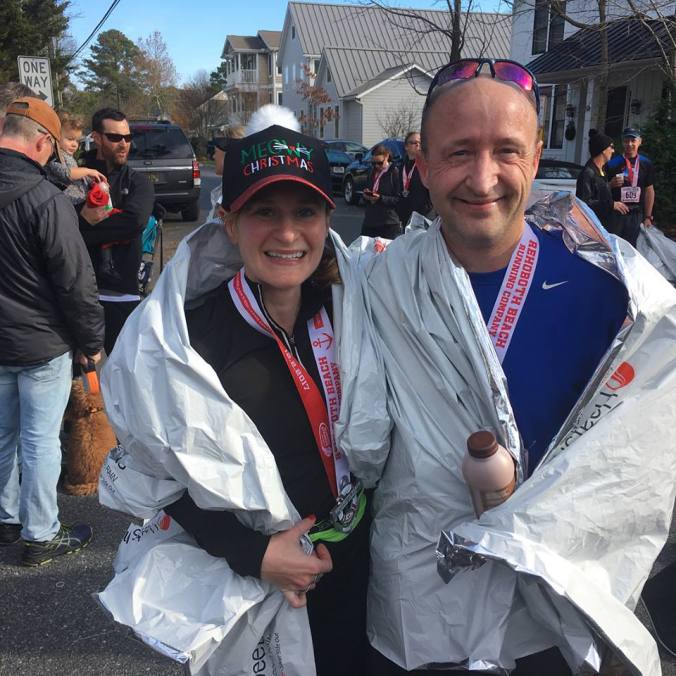
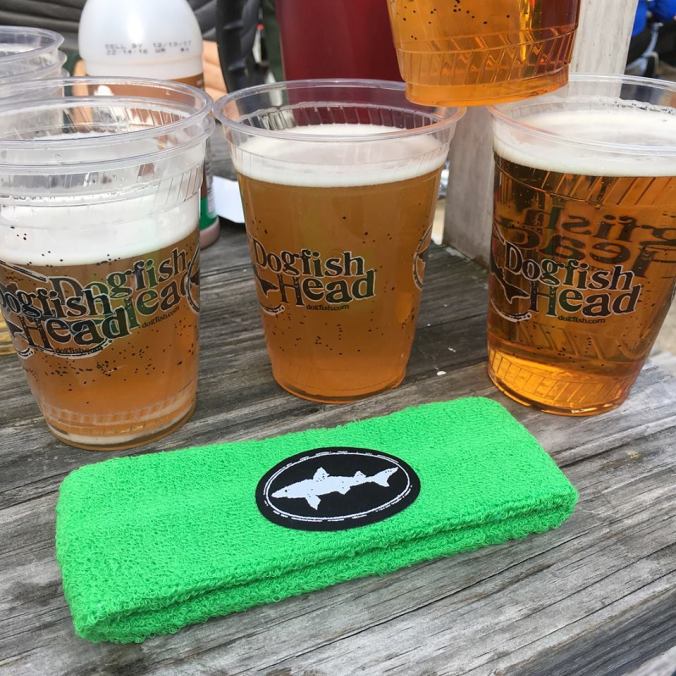
This time, he was right there at mile 26, and when he saw me, he yelled “EMPTY THE TANK! The finish line is right around the corner!” So I pretty much pushed as hard as I could mentally, ran that last 0.2 with everything left in me and crossed the finish line in a hair over 3:35. I hugged my new friend, who congratulated me on the BQ. Then I met up with my husband, who had brought a change of clean clothes for me, and it was time to hit the after party! I got three beer tickets, for three Dogfish Head Seaquench Ales (one of my favorite beers), and boy, did they taste good!
finishlinephoto2

finishlinephoto3

Why I qualified 

Aside from the kindness of a fellow marathoner, there are a few reasons why I had such a successful race.

  1. Yasso 800s. This speed workout is named after its creator, Runner’s World’s Bart Yasso, who realized he could predict his marathon time, more or less, by how fast he could run 800 meters. My training plan had me doing the 800s every three weeks, starting off with repeats of four, all the way up to repeats of eight. I ran my repeats in 3:35, and ….. voila, a 3:35 marathon! Of course there is probably more to it than that, but I was amazed at how accurate the 800s turned out to be. I tweeted Yasso after the race, and he said he was actually in Rehoboth cheering on the runners — so I ran past him and didn’t even realize!
  2. I ran more than ever before. This is a no brainer, but the more miles you log, the faster you will get. In previous training cycles, I’d always run one 20-miler before tapering. This time, I ran three. Plus, the day before the long run always included a medium-long run– for example, eight miles Saturday then 16 on Sunday; nine miles, then 19 miles; and finally, three weekends of 10 miles, then 20 miles. Some weekends I felt like I did nothing but run!
  3. The weather! Totally out of a runner’s control, but bad weather can make or break a race. I struggled with what to wear during this race, and settled on a long-sleeved technical top and running tights. I did not wear a running jacket, and I’m glad I didn’t, because even with temperatures in the 40s, it started to warm up pretty quickly. I never felt too hot or cold, and I feel like I really lucked out there.
  4. I followed the long, slow distance rule during long runs, but also worked on finishing fast. You’re supposed to do your long runs during marathon training at a pace that’s easy and comfortable for you, which is probably not your race pace. I usually have a hard time doing that, but this time, I ran my long runs in the 9-minute range. But I also threw in a few marathon pace miles in there and worked on finishing fast (I ran the last two miles of my 20-milers at a sub-8 pace.) I feel that definitely helped me in the last few miles of the Rehoboth Marathon, when I was pushing hard physically and mentally.
  5. I believed in myself. Simple, but true! I’ve spent the last few months thinking about my goal and dreaming of what it would feel like to run a BQ time. I knew I had the physical ability to do it, and I’d certainly put in the work. I truly saw this as my race. And it was.

Since I qualified for Boston 2019, that leaves me in search of a marathon in 2018! What should my next one be? I’m thinking of targeting a November marathon, but I’m so used to training for marathons over the winter that I kind of want to do a spring one, too. I welcome your suggestions!